Semi vs. Full Automatic Cutlery Production Line: Which to Choose?
A quick overview of the topics covered in this article.
Choosing the wrong cutlery production line can limit your factory’s growth for years. Too much automation may strain your budget. Too little may slow your expansion. So which option truly fits your business?
Semi-automatic and full automatic cutlery production lines each offer distinct advantages. Your decision should align with your production volume, labor costs, and budget. Knowing the differences helps you choose the best solution for long-term growth.
Before you invest in new machines, understand the key differences. Then choose the solution that fits your factory goals.
What Is a Semi-Automatic Cutlery Production Line?
Many factory owners worry about high upfront costs. But relying solely on manual labor can reduce output and lead to quality differences.
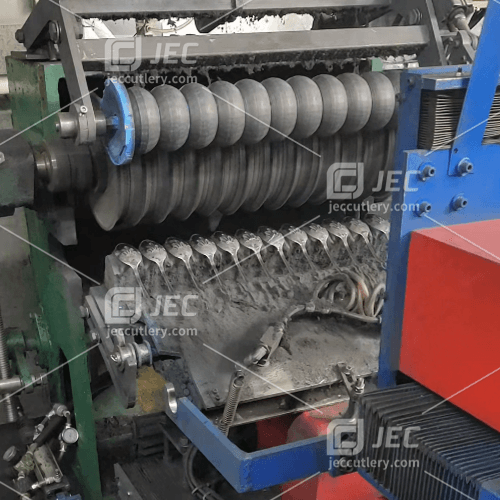
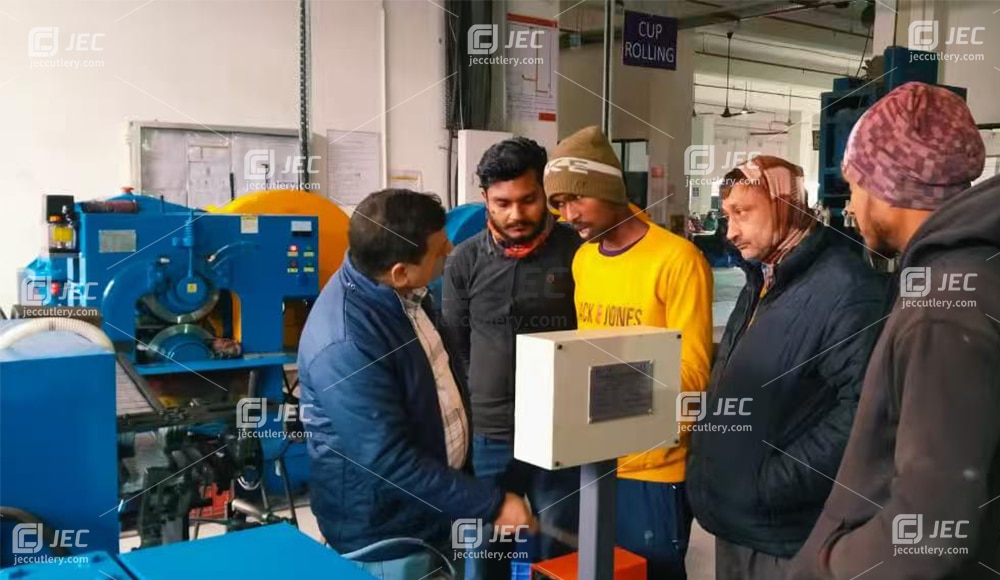
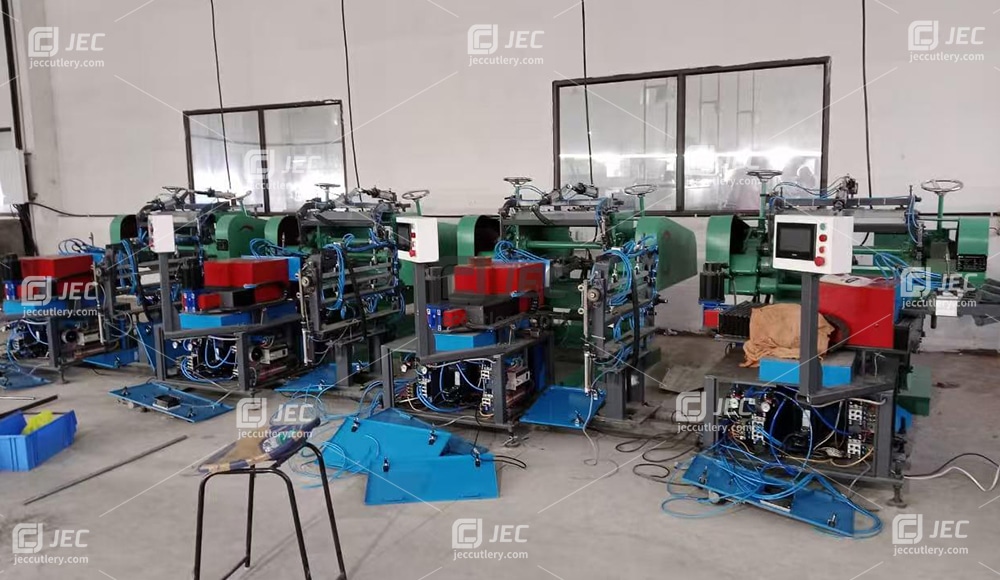
A semi-automatic cutlery production line uses both workers and machines. It includes punch presses, hydraulic presses, cross rollers, polishing machines, and cleaning machines. Workers load and unload materials. The machines handle forming and shaping.
This type of line is suitable for small and medium-sized factories. It is also a good choice for companies entering the stainless steel cutlery business. It offers:
- Lower initial investment
- Greater flexibility for different product designs
- Easier maintenance and operation
However, output still depends on workers. Surface quality may not be as consistent as with full automation.
What Is a Full Automatic Cutlery Production Line?
As production demand grows, manual handling can become a bottleneck. Rising labor costs and inconsistent output often push factories to consider full automation.
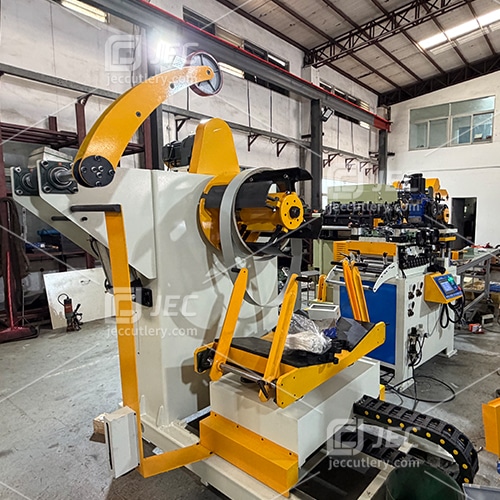
A fully automatic cutlery production line integrates all machines into a seamless system. It includes automatic feeding machines, punch presses, hydraulic presses, and cross rollers. Polishing and cleaning machines are also part of the line. Conveyors move products between steps.
The process starts with feeding stainless steel sheets. It ends with surface polishing and cleaning. Most steps run automatically. Very little manual work is needed.
This solution is ideal for medium to large-scale manufacturers aiming for:
- High daily output
- Stable and repeatable quality
- Reduced long-term labor costs
- Improved workshop safety and efficiency
The initial investment is higher. But over time, the cost to make each piece is much lower.
How Do They Compare in Cost, Productivity, and Quality?
Factory owners often focus only on machine price, but the real question is total production cost over time.
- Initial Investment: Semi-automatic lines require less capital upfront. Fully automatic lines require a higher initial investment due to integrated automation systems.
- Productivity: Full automatic production lines dramatically increase output through synchronized processes and continuous operation. Semi-automatic lines produce lower daily volumes due to manual intervention.
- Quality Consistency: Automation ensures uniform pressure, forming accuracy, rolling precision, polishing finish, and cleaning results. This reduces rejection rates and strengthens brand reputation in export markets.
When calculating ROI, many manufacturers see that automation pays back faster than expected. This is especially true in areas with rising labor costs.
Which Production Line Should You Choose?
The answer depends on your factory’s current stage and future vision.
– Choose a semi-automatic production line if:
- You are starting a new cutlery factory
- Your budget is limited
- Your production volume is moderate
- You require flexibility for multiple designs
– Choose a full automatic production line if:
- You aim for high-volume export markets
- Labor costs are increasing
- You want stable, standardized quality
- You plan long-term expansion
For growing factories, it can be smart to begin with semi-automatic machines. Upgrade to full automation as production needs grow.
In conclusion, there is no one-size-fits-all solution. Semi-automatic lines are flexible and cost less to start. Fully automatic lines give the highest efficiency and consistent quality.
The right choice depends on your production goals, budget, and long-term plans.
If you plan to build or upgrade a stainless steel cutlery factory, choose the right production line now. This will make your factory more competitive going forward.
A quick overview of the topics covered in this article.